
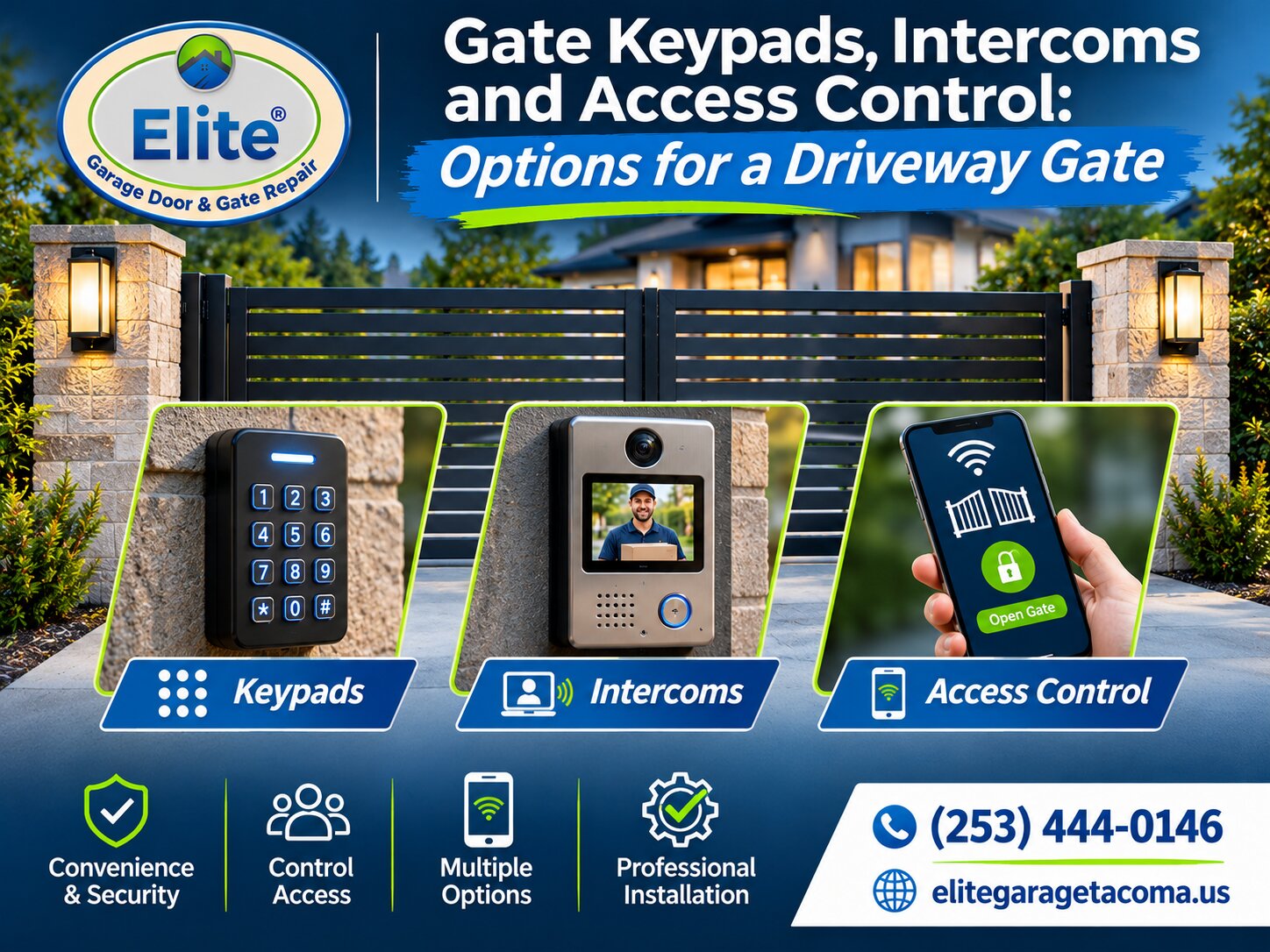
Gate Keypads, Intercoms and Access Control: Options for a Driveway Gate
Driveway gate access control refers to the methods used to open a gate without walking up and operating it by hand. A gate can be set up with one method or several working together, depending on how the property is used and who needs to get through. Understanding the options helps in deciding what to ask for when the gate operator is installed or upgraded.
Handheld Remotes
A handheld remote sends a signal to a receiver connected to the gate operator, similar to the way a remote works for a garage door. It suits a household that wants a simple way to open the gate from a vehicle without stopping to enter a code. Each remote needs to be recognized by the receiver, and the operator’s control board needs enough memory or channels to hold the number of remotes in use.
What Does a Gate Keypad Do?
A gate keypad lets a visitor or delivery driver open the gate by entering a code, without needing a remote or a key. It suits a property with occasional visitors, guests, or service providers who need temporary access. The keypad communicates with the gate operator, and the control board needs to support stored codes and allow codes to be added or removed over time.
For general guidance on setting up codes for an entry pad, see this post on programming a keyless entry pad.
How Does a Gate Intercom Help Visitors?
A gate intercom allows a visitor standing at the gate to speak with someone inside the house before the gate is opened. It suits a property where visitors need to be identified before entry is granted, rather than relying on a shared code. Some intercoms connect to a phone line or a wireless network, while others pair with a unit mounted inside the house, and the choice affects what wiring or signal path the technician needs to plan for.
A gate intercom can also be paired with a card or fob reader so that regular visitors do not need to speak with anyone each time they arrive.
Card and Fob Readers
A card or fob reader opens the gate when a registered card or key fob is held near the reader. It suits a property with a defined group of regular users, such as household members or routine service visits, where codes would be harder to manage than physical cards. The control board needs to support a reader interface and keep a list of which cards are currently active.
Exit Sensors for Vehicles Leaving
An exit sensor detects a vehicle approaching the gate from inside the property and signals the operator to open without the driver needing a remote or code. It suits a driveway where vehicles leave often enough that stopping to use a keypad becomes inconvenient. The sensor needs a clear, unobstructed view of the area where vehicles pass, and the operator needs an input dedicated to this kind of signal.
Matching Access Control to the Gate Operator
Every access method depends on the gate operator and its control board having the right inputs and capacity to support it. Power needs to reach the gate itself for a keypad, intercom, or reader to function, and a signal path needs to run between that device and the operator. A trained technician can review the existing operator and advise on what it can support before new hardware is purchased.
A gate operator shares some traits with a garage door opener, since both rely on a control board, a power source, and a receiver for remote signals. For background on how openers are chosen and set up, see this post on choosing a garage door opener. General information on opener options is also available under Garage Door Openers, and replacement components for a gate or door system can be found under Garage Door Parts.